Archives:

After The Dust

by  

Young people at the recent reunion for tenants of 5135 S. Federal St., one of the buildings in the now-demolished Robert Taylor Homes development. The reunion was held August 7 in the Dan Ryan Woods. Photo by Marsha Muhammad.

Five years after the last building in the Robert Taylor Homes was demolished, it’s a miracle to locate former residents not only from that development but from anywhere in the Chicago Housing Authority. After years of being displaced by gentrification, we were united on a social network site named Facebook. The best of my former neighbors at Robert Taylor are doing just fine. It may surprise many to see that we are functional people, since we were deemed dysfunctional and self-destructive. But we are alive and still standing! Still standing literally and figuratively.

In the summer of 1998, the first building in the Robert Taylor Homes located at 3901 S. Federal St. was torn down, followed by the cluster buildings on 53rd Street infamously known as the “Hole.” The name derived from the term, “If you come in, you can’t come out.”

Moving out of public housing became a challenge to the majority of former residents. Many families were disenfranchised by a welfare system that cut off their resources if they found employment that increased their income a penny over the poverty level. Residents learned how to survive by manipulating the system. Do just enough to not go homeless and live comfortable, but not enough to move out into the private sector and pay market rent. These residents outnumbered the working-class residents that paid market rent. This system bred generations of families who were taught the same cycle of survival. People rarely moved out. Perhaps the “Hole” should have been the nickname for the entire development.

Read more »

Tags: , , , , , , , , , ,
Categories: Homepage

Commissioner Fails to Show at Mental Health Town Hall Meeting

by  

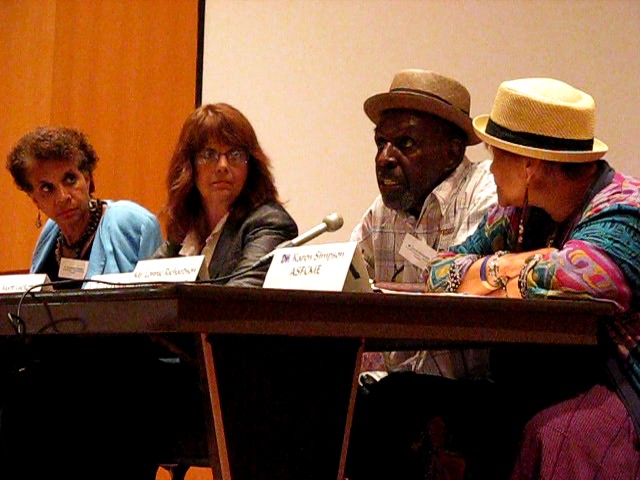
Community activist Lonnie Richardson discusses the need for mental health services for young people at a town hall on Aug. 5. Photo by Mary C. Piemonte.

Dozens of people concerned with the state of the city’s mental health services, who packed a community meeting this week, were disappointed when the city public health commissioner did not show up.

N’Dana Carter, a member of the Southside Together Organizing for Power (STOP) community human rights organization, who was moderating the event at Mercy Hospital’s Joyce Auditorium, 2525 S. Michigan Ave., on the evening of August 5 told the audience that Chicago Department of Public Health Commissioner Dr. Bechara Choucair called and cancelled two hours before the meeting began.

“Our fearless leader Dr. Choucair…called at 3:30 p.m. to cancel. He will not be here,” declared Carter, a consumer at the Greater Grand/Mid-South Mental Health facility at 4314 S. Cottage Grove.

“Dr. Choucair didn’t make the meeting tonight, because he felt that we were going to ambush him. And he was afraid. He was afraid because the citizens of the city of Chicago and our visitors want the mental health clinics, and they don’t want privatization of any of the health clinics,” she added.

Read more »

Tags: , , , , , , ,
Categories: Homepage

Mayor Continues Search for New CHA Head

by  

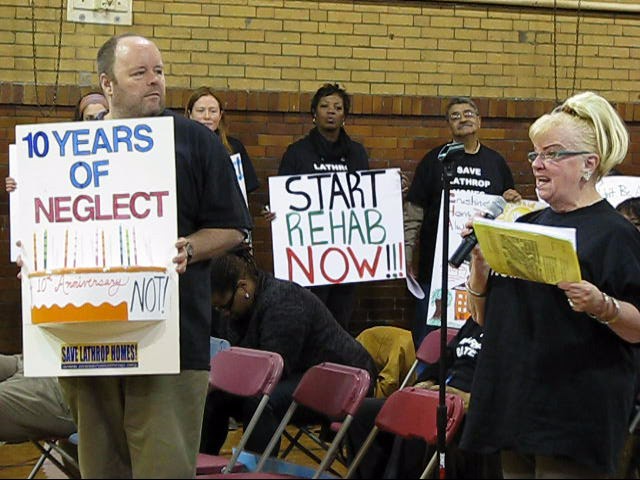
Tenants from the Julia C. Lathrop Homes public housing complex on the North Side object to CHA's plans for their development during a recent CHA Board meeting in March. The new CHA CEO will have to decide Lathrop Homes' future. Photo by Mary C. Piemonte

Mayor Rahm Emanuel is still searching for the right person to head the Chicago Housing Authority.

Previous CHA CEO Lewis Jordan resigned his position two months ago after questions were raised about his and other CHA employees’ use of government-issued credit cards.

Former CHA board member Carlos Ponce is serving as interim CEO and overseeing the controversial effort to demolish or rehab all of its family and senior housing stock that officially began in January 2000.

Read more »

Tags: , , , ,
Categories: Homepage Uncategorized

Youth Activists: Juvenile Inmates “Treated Like Animals.”

by  

Editor’s Note: The following story was written by a student in the Urban Youth International Journalism Program in partnership with Imagine Englewood If, a youth services organization based in that South Side neighborhood:

Going without clean clothes for weeks. Eating bad food. Suffering violence. These are realities of the juvenile justice system in Cook County, according to youth organizations and experts who spoke at Roosevelt University March 10 in an event organized by the group Fearless Leading by Youth (FLY) and the Southwest Youth Collaborative to expose how teens are treated in detention facilities.

It was a shame to hear how the youth inmates are being treated at the Audy Home detention facility on the Southwest side. At the event, youth leaders said the detained youth have to wear the same jumpsuits and underwear for up to two weeks before getting clean ones. And they said the food being served was weeks past its expiration date, causing many of the young inmates to become ill.

Hearing their descriptions made me cringe inside and wonder how I could help. The food and lack of clothing changes weren’t the only things of concern. Violence was an even bigger topic. The speakers said that in 2007, a “riot” broke out at the Audy Home and chairs, computer monitors and keyboards were thrown. Security guards and employees were hurt, according to media reports. But speakers at Roosevelt said the juvenile detainees were also hurt, and it took weeks or even months for their cuts and bruises to fully heal.

Read more »

Tags: , , , , ,
Categories: Homepage UYIJP

A Toxic Tour of Little Village

by  

Editor’s Note: The following story was written by a student in our first-ever Eco Youth Reporters program, conducted in conjunction with award-winning journalist Kari Lydersen, Michigan State University’s Knight Center for Environmental Journalism, and Imagine Englewood If, a youth services organization based in that South Side neighborhood. The Eco Youth Reporters program is generously funded by the McCormick Foundation:

On July 13, 2011 we went to Little Village for a “Toxic Tour.” There were five teenagers and one grown woman taking us on a tour to show us the Crawford coal plant, the plastics recycling company MRC Polymers, Meyer Steel Drum and a garden at a school, so they could tell us what environmental issues are going on around Little Village.

The organization is the Little Village Environmental Justice Organization (LVEJO). Our tour guides were Brenda Becerra, 18, Maira Galvan, 17, Viviana Galvan, 19, Daniela Jurado, 19, Hannah Weinstein, 20, and Carolina Macias, 18.

Read more »

Tags: , , , , , , ,
Categories: Homepage UYIJP